
The AI Bottleneck: Why Faster Code Does Not Mean Faster Products
This article was written with AI assistance and edited by the agenthouse team. The illustrations are AI-generated.
AI has made writing software code cheaper and much faster. Many teams expected features to reach customers at the same speed. Most are finding that they don’t. An idea from 1984 explains why.
Every Process Is Only as Fast as Its Slowest Step
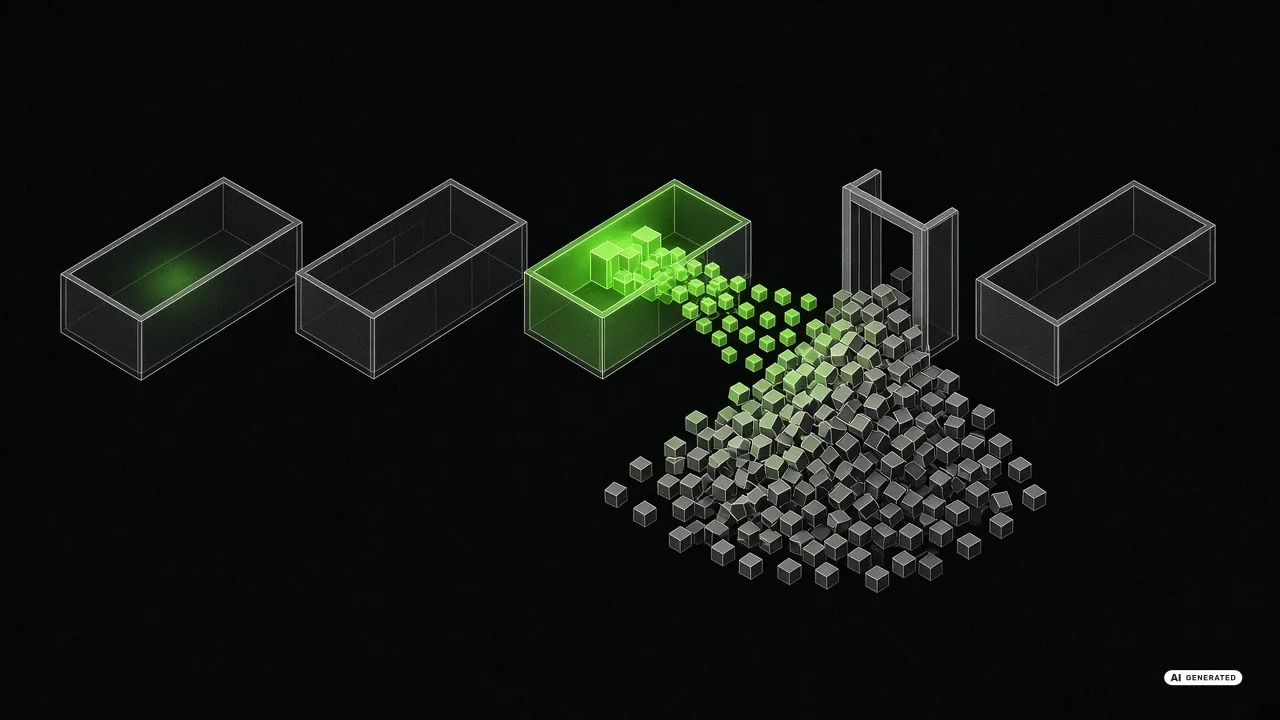
In 1984, the physicist and management thinker Eliyahu M. Goldratt published The Goal, a novel about a plant manager trying to save a failing factory. The book introduced the theory of constraints. Its core idea is simple: every step in a process has its own throughput, and the whole system can never deliver more than its slowest step, the constraint. Speeding up any other step doesn’t help. It only builds up inventory in front of the bottleneck.
Goldratt first applied the idea to factory floors. He later carried it into project management, and books like The Phoenix Project brought it into IT and software delivery.
The Beat That Moves Work Forward
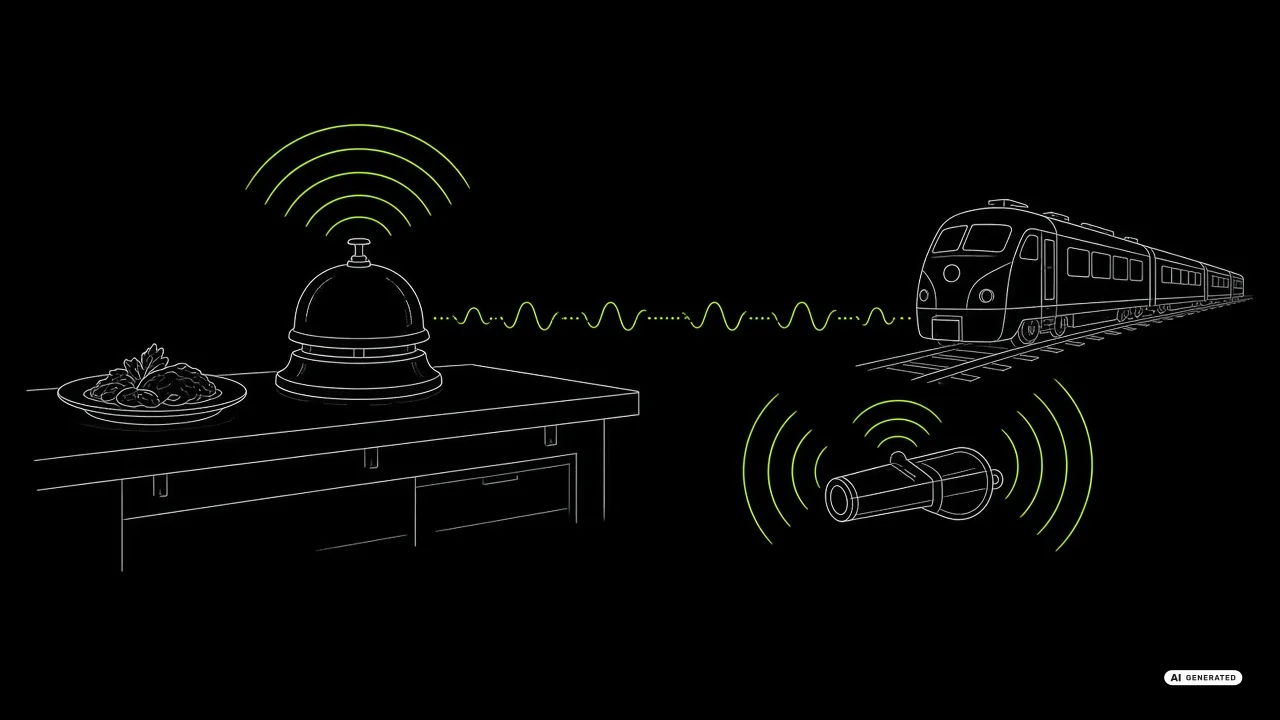
Processes run to a rhythm. Lean manufacturing calls it the takt, from the German word for beat: the pace at which work has to move from one step to the next. Goldratt described the same thing as a drum, beaten by the constraint, that sets the pace for everyone else.
Often the signal is barely visible. Think of the bell in a restaurant kitchen that tells the waiter a dish is ready to serve, or the whistle that tells a train it may leave. When every step works to the same beat, the process is in harmony.
Software development rarely is. With waterfall or agile alike, perfectly balanced runs are the exception: requirements stall, reviews pile up, releases wait on testing.
What AI Changes: One Step Got Much Faster
Generative AI has sped up exactly one step of the chain: writing code. What used to take days now takes hours, sometimes minutes. That puts pressure on the process from two sides.
Upstream, the question “what should we build?” turns into a vacuum. When implementation is no longer the limiting factor, the quality of the input matters far more. Business development and product management have to understand real customer needs faster and more precisely than before. Otherwise the team efficiently builds features nobody wants and nobody pays for. Fast code doesn’t make a bad idea any better. It just gets the bad idea out sooner.
Downstream, a new bottleneck forms. Developers reviewing AI-generated code, test managers, architects and DevOps engineers suddenly face much more input to assess. The code-writing step has gone up by an order of magnitude. The review, test and operations steps have not.
The result is what Goldratt would have predicted: work in progress piles up in front of the new constraint. The speed teams feel when generating code doesn’t show up as faster feature releases. That’s especially true in companies that still care about maintainable, working software, and they should.
The Fix: Harmonize the Whole Chain, Not Just One Step
Making one step even faster won’t solve this. What helps is supporting every step with the same agentic structure, so that clear expectations apply to each one, from the first market hypothesis to the release notes. We call that structure an agentic engineering harness.
Market validation. Agents help teams test hypotheses, gather evidence and reach product-market fit before anything is handed over. The output is structured artifacts, not loose ideas.
Product management. Product management turns those artifacts into meaningful user stories. Using the same framework, each story is in scope, testable and meets a clear Definition of Ready (DoR) before development starts.
Development and testing. Test-driven development (TDD) is planned directly against the user story, together with the team’s own governance rules. Quality is built in at the source instead of being found in review.
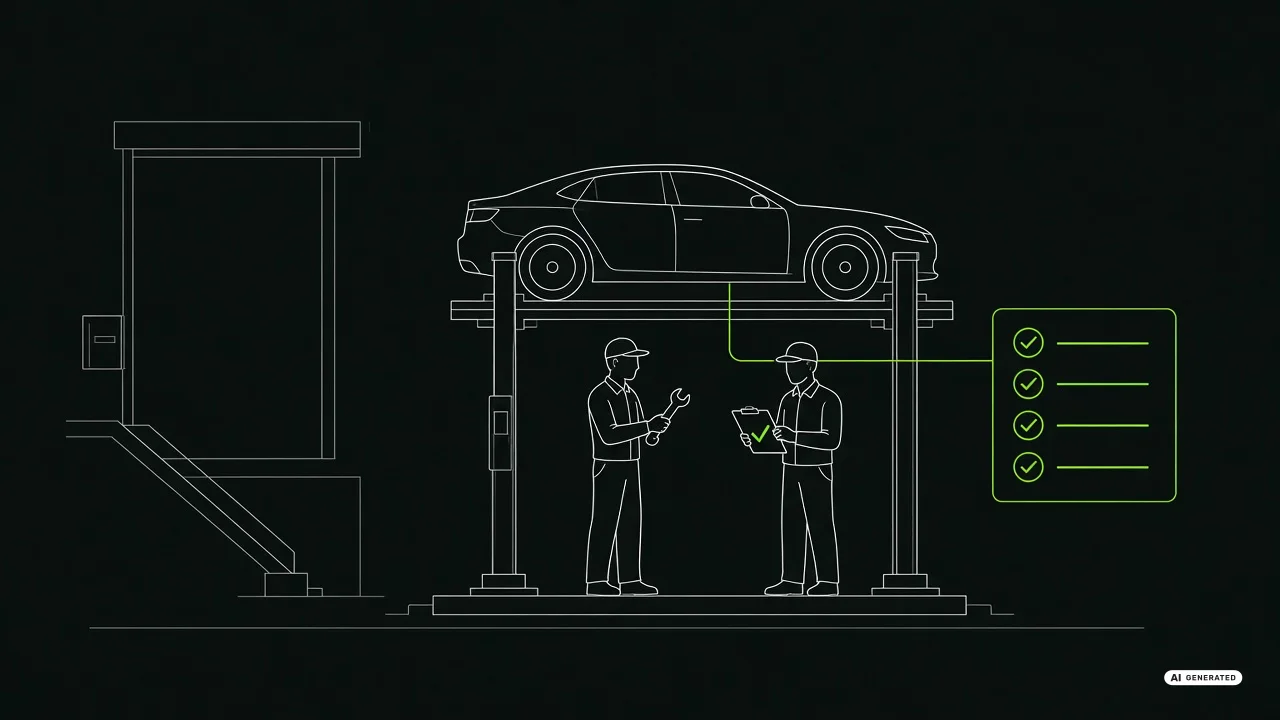
Review and operations. Reviewers no longer start from scratch. They check work that was already built against agreed criteria. It’s like having the vehicle inspector work alongside the mechanic, instead of waiting at the end of the line.
Documentation and go-to-market. AI-assisted documentation is produced as part of the work. Product marketing and support teams get accurate material at the same pace the product changes.
Once every step works to the same beat, the speed gained from AI coding finally reaches the customer.
The Whole Story in 18 Seconds
Open the animation on its own page (18 seconds, no sound)
Getting Started
Every part of this harness is available in agenthouse’s open source agentic engineering framework: reusable roles, skills and product processes from market validation through delivery, support and learning.